The attorneys at Seber Bulger LLP represent individuals who were fired, demoted or failed to be promoted due to workplace discrimination, retaliation or sexual harassment.
- Past lost wages
- Future lost wages
- Lost benefits
- Emotional distress damages
- Punitive damages (to punish the company)
- Attorneys’ fees
We also seek job reinstatement for our clients, if desired.
Legal Protections Against Discrimination
There are various laws at both the federal and state level designed to protect employees from discrimination. These include the Civil Rights Act, the Americans with Disabilities Act, and the Age Discrimination in Employment Act. In California, additional protections are provided under the Fair Employment and Housing Act.
As employment lawyers in Beverly Hills, CA, at Seber Bulger Law, we play a crucial role in assisting victims of workplace discrimination. We provide legal advice, help in filing discrimination claims, and represent clients in legal proceedings. Our expertise ensures that victims’ rights are protected and that they receive the justice and compensation they deserve.
How to Address Workplace Discrimination
If you suspect you are a victim of workplace discrimination, it’s important to document incidents and seek legal counsel. At Seber Bulger Law, we encourage employees to come forward with their concerns. Our experienced team will guide you through the legal process, ensuring your case is handled professionally and empathetically.
Workplace discrimination is an issue that affects many, hindering career growth and personal well-being. It’s important for employees to recognize the signs of discrimination and know their rights. If you are facing such challenges, remember that you are not alone. At Seber Bulger Law, we are committed to fighting for your rights and ensuring a fair and inclusive workplace for all. Contact us to discuss your case and explore your legal options. Together, we can work towards a discrimination-free workplace.
Protection Against Workplace Retaliation
Retaliation in the workplace is a concern for many employees who exercise their rights under various employment laws. As an Employment Lawyer in Beverly Hills, CA, at Seber Bulger Law, we frequently address concerns from employees who fear or have experienced retaliation from their employers. Understanding your rights and the legal protections available is crucial in these situations.
Workplace retaliation occurs when an employer punishes an employee for engaging in legally protected activity. This retaliation can take many forms, from subtle actions like exclusion from meetings to more overt acts like demotion or termination.
Legally Protected Activities
Employees are protected from retaliation when they engage in certain activities, including:
- Filing a Complaint: Whether it’s a complaint about workplace safety, harassment, discrimination, or wage and hour violations.
- Participating in an Investigation: Being a witness or providing information in an investigation about unlawful practices in the workplace.
- Refusing to Engage in Illegal Activities: Declining to participate in actions that would violate laws or regulations.
- Requesting Accommodations: Asking for accommodations related to disability or religious practices.
Forms of Retaliation
Retaliation by an employer can manifest in various ways:
- Termination or Demotion: One of the most clear-cut forms of retaliation.
- Salary Reduction: Cutting wages or denying deserved raises.
- Change in Job Assignments: Assigning less favorable tasks or changing schedules to inconvenience the employee.
- Hostile Work Environment: Creating or allowing a work environment that is intimidating or uncomfortable for the employee.
Legal Protections Against Retaliation
There are several laws at both the federal and state level designed to protect employees from retaliation, such as:
- The Civil Rights Act: Protects against retaliation for opposing discrimination or participating in discrimination proceedings.
- The Fair Labor Standards Act: Covers protections related to wage and hour complaints.
- Whistleblower Protections: For those who report illegal activities of their employers.
Steps to Take if You Face Retaliation
If you suspect retaliation, consider the following steps:
- Document Everything: Keep records of all incidents that you believe constitute retaliation.
- Report Internally: If possible, report the retaliation to a supervisor or human resources.
- Seek Legal Counsel: Consult with an employment lawyer to understand your rights and options.
Retaliation in the workplace is illegal and should not be tolerated. Understanding your rights is the first step in protecting yourself. If you believe you are facing retaliation, we at Seber Bulger Law are here to help. Contact us for professional legal advice and representation. Our team is committed to ensuring that your rights are protected and that you can exercise your legal rights without fear of retaliation from your employer.
Examples of Workplace Discrimination
Workplace discrimination remains a significant issue in modern workplaces, manifesting in various forms and affecting numerous individuals across different industries. As an employment lawyer in Beverly Hills, CA, at Seber Bulger Law, we have encountered numerous instances of workplace discrimination, and in this article, we aim to shed light on this critical issue.
Workplace discrimination occurs when an employee is treated unfavorably due to certain characteristics, such as race, gender, age, religion, disability, or sexual orientation. This can range from hiring practices to unfair treatment in the workplace, affecting an individual’s career progression, salary, and overall well-being.
One of the most prevalent forms is gender discrimination, where employees face bias due to their gender. This often leads to unequal pay, limited career opportunities, and in some cases, harassment. Despite strides towards gender equality, women, especially in male-dominated industries, frequently encounter these challenges.
- Racial Discrimination
Racial discrimination is another widespread issue. Employees from minority ethnic backgrounds may experience unequal treatment, such as being passed over for promotions, subjected to derogatory comments, or facing implicit biases that affect their career growth.
- Age Discrimination
Age discrimination typically affects older employees who are often seen as less capable or adaptable than their younger counterparts. This can result in unfair job terminations, being overlooked for promotions, or exclusion from professional development opportunities.
- Disability Discrimination
Discrimination based on disability is also a critical concern. This includes not providing reasonable accommodations, overlooking qualified candidates for jobs, or creating a hostile work environment for those with disabilities.
- Direct Sexual Discrimination
Direct sexual discrimination is overt and explicit. It occurs when an individual is treated less favorably because of their gender compared to someone of a different gender under similar circumstances. Examples of direct discrimination include a qualified female employee being passed over for a promotion in favor of a less qualified male colleague, derogatory comments or jokes about someone’s gender, unequal pay where men and women are not paid the same for doing the same job, and more.
- Indirect Sexual Discrimination
Indirect sexual discrimination is more subtle and often unintentional. It happens when a seemingly neutral policy or practice disproportionately affects one gender. This form of discrimination is not about treating someone less favorably because of their gender but rather about implementing policies that inadvertently disadvantage one gender. Examples include company policies that require working late hours, disproportionately affecting women who might have childcare responsibilities, a job requiring physical attributes that unnecessarily favor one gender over another, and more.
Both direct and indirect sexual discrimination are illegal under various laws, including the Civil Rights Act of 1964 and state-specific laws. In California, the Fair Employment and Housing Act provides additional protections. These laws ensure that individuals have the right to a workplace free from gender-based discrimination.
Types Of Workplace Discrimination Help Our Firm Handles
 Workplace discrimination can affect your job security, income, and sense of fairness at work, as our Beverly Hills, CA employment lawyer knows. When decisions about hiring, pay, discipline, or termination are influenced by personal characteristics rather than performance, the impact can be lasting. You may feel pressure to stay quiet or worry about retaliation if you speak up. Our firm works with employees who believe they have been treated unfairly and want clear guidance on how to protect their rights and move forward. Our firm offers free consultations so that getting the help you need isn’t difficult. Give our office a call.
Race And Ethnicity Discrimination
Race and ethnicity discrimination occurs when you are treated differently because of your race, color, or ethnic background. This type of conduct may manifest as unequal discipline, denied promotions, unfair evaluations, or offensive comments that affect your ability to work in a respectful environment.
Sex And Gender Discrimination
Our Beverly Hills employment lawyer understands that sex and gender discrimination involves unfair treatment based on sex, gender identity, or gender expression. You may experience unequal pay, limited advancement opportunities, harassment, or biased expectations that do not apply to others performing similar work.
Pregnancy And Family Status Discrimination
Pregnancy and family status discrimination arises when an employer treats you unfairly due to pregnancy, childbirth, or caregiving responsibilities. This can include reduced hours, forced leave, or negative job changes after requesting reasonable adjustments related to family needs.
Age Discrimination
Age discrimination affects workers who are treated less favorably because of their age, often impacting employees over forty. It may involve being passed over for training, laid off first during workforce reductions, or pressured to retire earlier than planned.
Disability Discrimination
Disability discrimination occurs when an employer takes adverse action based on a physical or mental condition. This may include refusal to provide reasonable workplace adjustments, unfair discipline tied to medical limitations, or assumptions about your ability to perform your job.
Religious Discrimination
Religious discrimination involves unfair treatment related to your religious beliefs, practices, or observances. You may face scheduling conflicts, denied accommodations, or negative treatment for requesting time off or workplace adjustments tied to your faith.
Workplace discrimination can leave you feeling isolated and uncertain about what steps to take next. You deserve to be judged on your work, not personal characteristics that have nothing to do with your performance. Seber Bulger Law represents employees who want accountability and fair treatment in the workplace. When you work with us, there is no fee until we win. Contact our office today to speak with our Beverly Hills employment lawyer to discuss your situation.
Beverly Hills Employment Lawyer FAQs
What Services Do Employment Lawyers in Beverly Hills, CA Offer?
Employment lawyers in Beverly Hills, CA specialize in a range of services tailored to address issues in the workplace. These services include counseling on employment contracts and agreements, guiding both employers and employees on labor law compliance, and representing clients in disputes involving wrongful termination, sexual harassment, wage and hour claims, and workplace discrimination. Additionally, they offer mediation and arbitration services for employment disputes, helping to resolve conflicts outside of court. Their expertise is crucial for navigating the complexities of California’s employment laws, ensuring that both employers and employees understand and exercise their legal rights and obligations.
When Should I Consult an Employment Lawyer in Beverly Hills?
You should consider consulting an employment lawyer in Beverly Hills when you encounter workplace issues that may have legal implications. This includes situations such as being wrongfully terminated, facing discrimination or harassment at work, dealing with disputes over wages or hours, or needing assistance with employment contracts. Additionally, if you’re an employer, consulting with an employment lawyer is vital when drafting employment policies, handling employee grievances, or facing legal claims from employees. Early legal advice can prevent escalation of these issues and ensure compliance with state and federal employment laws.
Can an Employment Lawyer Help Me with a Wrongful Termination Claim?
Yes, an employment lawyer in Beverly Hills can assist you with a wrongful termination claim. They can evaluate your case to determine if your termination violated California labor laws or breached your employment contract. Employment lawyers can guide you through the process of gathering necessary evidence, filing a claim with the appropriate government agency, or pursuing legal action in court. Their expertise is invaluable in navigating the complexities of wrongful termination cases, ensuring your rights are protected and helping you seek appropriate remedies, which may include compensation for lost wages and other damages.
How Do Employment Lawyers Charge for Their Services?
Employment lawyers in Beverly Hills, CA, typically charge for their services in several ways, depending on the case and the lawyer’s preferences. Common fee structures include hourly rates, contingency fees, and flat fees. For certain cases like wrongful termination or discrimination claims, lawyers may offer a contingency fee arrangement, meaning they only get paid if you win your case. Hourly rates are common for advisory services or cases that require extensive legal work. Some lawyers may also offer flat-fee arrangements for specific services, such as reviewing or drafting employment contracts. It’s important to discuss fee structures upfront to understand how you will be charged.
What Should I Look for When Choosing an Employment Lawyer?
When choosing an employment lawyer in Beverly Hills, consider their experience, area of specialization, and reputation. Look for a lawyer who specializes in employment law and has a track record of handling cases similar to yours. Check their credentials, client testimonials, and any peer reviews or ratings. It’s also important to consider their communication skills and availability – you want a lawyer who is responsive and communicates clearly. Finally, ensure that their fee structure is transparent and that you understand how you will be charged for their services. A good fit with your lawyer can significantly impact the outcome of your case and your overall experience.
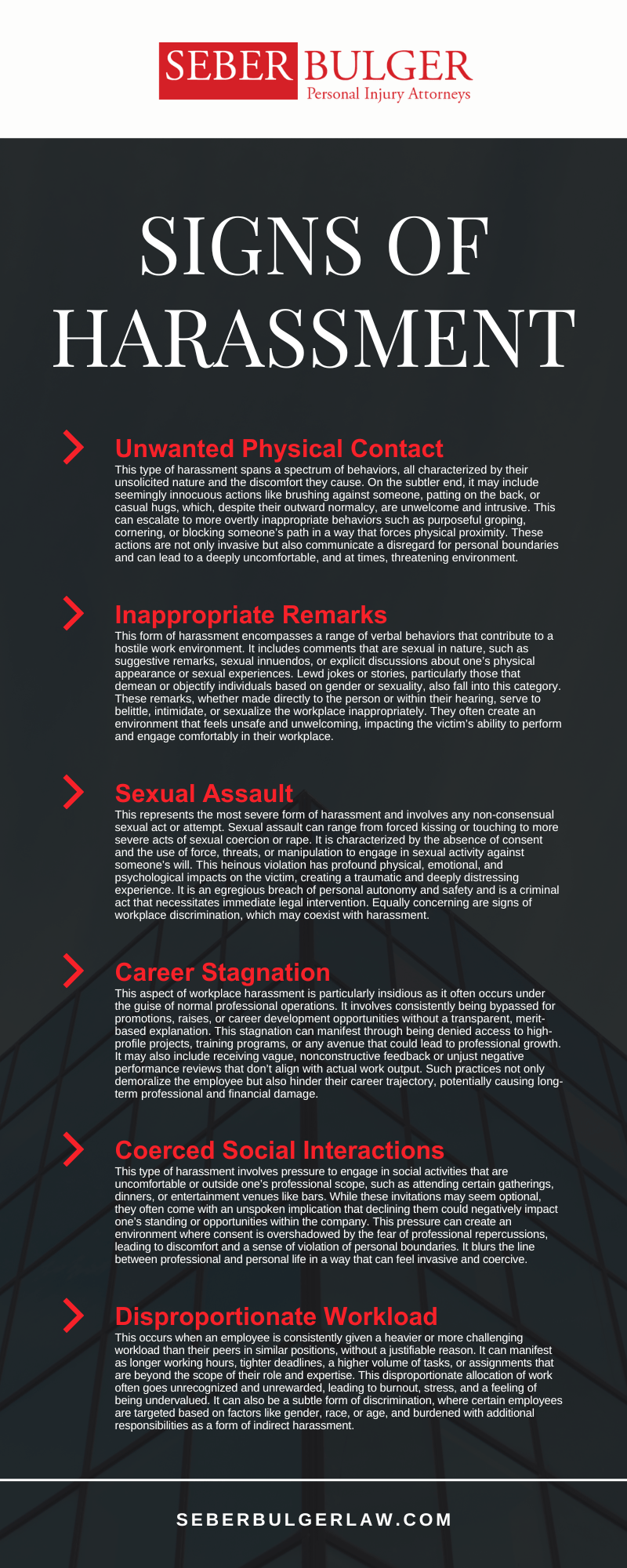
Signs Of Harassment
Recognizing the signs of harassment is essential for maintaining a safe and respectful workplace. Harassment can manifest in various forms, ranging from subtle to overt actions. Verbal harassment often involves unwelcome comments, jokes, or insults that can create an intimidating or hostile work environment. Physical harassment includes unwanted touching or invading personal space, which can escalate to more serious forms of physical assault. Visual harassment may involve displaying offensive images or gestures. Additionally, psychological harassment encompasses behaviors that demean, humiliate, or isolate an individual. It’s crucial to be aware of these signs and to take appropriate action, ensuring a workplace culture that promotes respect and dignity for all.
Unwanted Physical Contact
This type of harassment spans a spectrum of behaviors, all characterized by their unsolicited nature and the discomfort they cause. On the subtler end, it may include seemingly innocuous actions like brushing against someone, patting on the back, or casual hugs, which, despite their outward normalcy, are unwelcome and intrusive. This can escalate to more overtly inappropriate behaviors such as purposeful groping, cornering, or blocking someone’s path in a way that forces physical proximity. These actions are not only invasive but also communicate a disregard for personal boundaries and can lead to a deeply uncomfortable, and at times, threatening environment.
Inappropriate Remarks
This form of harassment encompasses a range of verbal behaviors that contribute to a hostile work environment. It includes comments that are sexual in nature, such as suggestive remarks, sexual innuendos, or explicit discussions about one’s physical appearance or sexual experiences. Lewd jokes or stories, particularly those that demean or objectify individuals based on gender or sexuality, also fall into this category. These remarks, whether made directly to the person or within their hearing, serve to belittle, intimidate, or sexualize the workplace inappropriately. They often create an environment that feels unsafe and unwelcoming, impacting the victim’s ability to perform and engage comfortably in their workplace.
Sexual Assault
This represents the most severe form of harassment and involves any non-consensual sexual act or attempt. Sexual assault can range from forced kissing or touching to more severe acts of sexual coercion or rape. It is characterized by the absence of consent and the use of force, threats, or manipulation to engage in sexual activity against someone’s will. This heinous violation has profound physical, emotional, and psychological impacts on the victim, creating a traumatic and deeply distressing experience. It is an egregious breach of personal autonomy and safety and is a criminal act that necessitates immediate legal intervention. Equally concerning are signs of workplace discrimination, which may coexist with harassment.
Career Stagnation
This aspect of workplace harassment is particularly insidious as it often occurs under the guise of normal professional operations. It involves consistently being bypassed for promotions, raises, or career development opportunities without a transparent, merit-based explanation. This stagnation can manifest through being denied access to high-profile projects, training programs, or any avenue that could lead to professional growth. It may also include receiving vague, nonconstructive feedback or unjust negative performance reviews that don’t align with actual work output. Such practices not only demoralize the employee but also hinder their career trajectory, potentially causing long-term professional and financial damage.
Coerced Social Interactions
This type of harassment involves pressure to engage in social activities that are uncomfortable or outside one’s professional scope, such as attending certain gatherings, dinners, or entertainment venues like bars. While these invitations may seem optional, they often come with an unspoken implication that declining them could negatively impact one’s standing or opportunities within the company. This pressure can create an environment where consent is overshadowed by the fear of professional repercussions, leading to discomfort and a sense of violation of personal boundaries. It blurs the line between professional and personal life in a way that can feel invasive and coercive.
Disproportionate Workload
This occurs when an employee is consistently given a heavier or more challenging workload than their peers in similar positions, without a justifiable reason. It can manifest as longer working hours, tighter deadlines, a higher volume of tasks, or assignments that are beyond the scope of their role and expertise. This disproportionate allocation of work often goes unrecognized and unrewarded, leading to burnout, stress, and a feeling of being undervalued. It can also be a subtle form of discrimination, where certain employees are targeted based on factors like gender, race, or age, and burdened with additional responsibilities as a form of indirect harassment.
Each of these forms of workplace harassment contributes to a toxic work environment, undermining employee morale, and well-being. They are often less overt than other types of harassment but can be equally damaging to an individual’s career and mental health. Recognizing and addressing these issues is critical in creating a fair, respectful, and inclusive workplace.
Beverly Hills Employment Infographic
Beverly Hills Employment Statistics
According to the Equal Employment Opportunity Commission (EEOC), there are more than 65,000 charges of discrimination filed with the agency each year. The most common types of discrimination claims the agencies receives include:
- Age
- Color
- Disability
- Genetic information
- National origin
- Race
- Religion
- Retaliation
- Sex
Employment Attorney Glossary
As your Beverly Hills, CA employment attorney, we are committed to helping employees understand their rights in the workplace. This glossary is designed to provide clear definitions of essential employment law terms so you can better understand the legal protections available to you. Whether you’re dealing with harassment, discrimination, or wrongful termination, it’s important to know how these concepts apply to your situation.
Fair Employment And Housing Act
The Fair Employment and Housing Act (FEHA) is a California law that protects employees and tenants from discrimination, harassment, and retaliation. Employers in California must provide a workplace free from behaviors and policies that discriminate against individuals based on protected characteristics. These include race, gender identity, religion, disability, sexual orientation, and age, among others. FEHA establishes clear guidelines for employers, requiring them to implement and enforce policies that promote equality and dignity in the workplace. Employees who believe their rights under FEHA have been violated may have grounds to file a claim for legal recourse.
Hostile Work Environment
A hostile work environment occurs when inappropriate or unwelcome behavior creates an offensive or intimidating atmosphere for employees. This can include slurs, offensive jokes, physical intimidation, or displays of derogatory materials. To qualify as a hostile work environment, the conduct must be severe or pervasive enough to interfere with an employee’s ability to perform their job effectively. The law protects workers from these conditions when the behavior is tied to discriminatory motives based on race, gender, religion, or other protected characteristics. It’s important to address such situations promptly to prevent further harm and seek the protections afforded under employment law.
Quid Pro Quo Harassment
Quid pro quo harassment refers to situations where employment benefits, such as promotions or salary increases, are conditioned on the acceptance of unwelcome sexual advances or requests. For example, if a supervisor offers a promotion in exchange for a date or threatens termination for refusing inappropriate requests, this constitutes quid pro quo harassment. Such behavior is unlawful and violates both California and federal employment laws. Employees facing these circumstances have the right to speak up and pursue legal remedies without fear of retaliation.
Wrongful Termination
Wrongful termination arises when an employee is fired for unlawful reasons, such as discrimination, retaliation, or violating the terms of an employment contract. For instance, dismissing an employee who reported workplace harassment or who took family leave under the law may constitute wrongful termination. Both California and federal laws aim to protect workers from unjust dismissals, giving employees the right to challenge terminations that violate their legal rights. Understanding the specific reasons behind a termination is crucial in determining whether legal action is appropriate.
Retaliation
Retaliation occurs when an employer punishes an employee for engaging in legally protected activities. Examples of retaliation include firing, demoting, reducing work hours, or creating a hostile work environment for an employee who reported discrimination or harassment. Employees who experience retaliation have strong legal protections under both state and federal law. If you believe you’ve been retaliated against, it’s important to act swiftly to protect your rights and document the adverse actions taken against you.
If you have questions about your rights in the workplace or believe you’ve experienced harassment, discrimination, or wrongful termination, we can help. Contact Seber Bulger Law for a consultation to discuss your situation and learn how we can support you in protecting your employment rights.
Contact Us To Discuss Your Workplace Concerns
If you’re facing harassment, discrimination, or wrongful termination, you don’t have to deal with it alone. At Seber Bulger Law, we’re here to help you explore your options and pursue the justice you deserve. Contact us today, and see how an employment attorney from our office can help.
“My granddaughter and I are so grateful to James and Jim for taking our Toxic Mold case. They are both so patient and extremely kind, always answering our calls and the detailed emails responding to our questions were amazing. They are a great team and what could have been an extremely frustrating case was actually very easy and handled with such care. We are very grateful and highly recommend them.”
Hello Self!

Hello Self!